
 On the Edges of the Bible
Most of us are familiar with the major heroes of the Bible– Noah, Abraham, Moses, David, Peter and Paul, and many others. These are the people taught about in Sunday School lessons and preached on over and over in Sunday sermons.
But sometimes my attention is drawn to the people on the edges of Bible narratives, those who are not famous yet are still a part of these Bible stories. I call them “peripheral people.” We don’t always notice them, but everyone and everything God includes in the Bible is there for a reason.
In 2 Timothy 3:16-17 we are told, “All Scripture is God-breathed and is useful for teaching, rebuking, correcting and training in righteousness, so that the servant of God may be thoroughly equipped for every good work” (emphasis added). We can learn from these people on the edges.
Recently I attended a Bible study on the book of Philippians, and my attention was drawn to one of these “peripheral people.” His name is Epaphroditis. But before we take a look at him, we need some historical context.
 The Church At Philippi
 The Church At Philippi
On his second missionary journey, Paul wanted to preach the gospel in Asia. But the Holy Spirit prevented that from happening. While in Troas, Paul had a vision of a Macedonian man begging for help, so he decided to travel there. Eventually he and his companions ended up in Philippi.
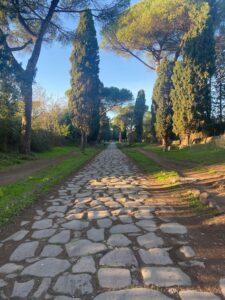
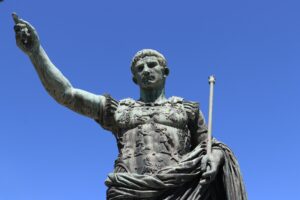
Philippi was a small but wealthy Greek city located on the Via Egnatia, one of the famous Roman roads. It was an important hub on the trade routes and was also in close proximity to several gold mines. It became a Roman colony after the Battle of Philippi in 42 BC, when Octavian released veteran soldiers to settle there. Many members of the Roman Legion and the Praetorian Guard would retire there after their tour of duty ended.
When Paul arrived he found that there was only a small group of Jews living there. Normally Paul would go to a synagogue to preach. Services would be held there three times a day, giving him ample opportunity to share the gospel. But there was no synagogue in Philippi at the time. A minimum of only ten Jewish males was required for the establishment of a synagogue, so apparently the Jewish population in Philippi was very small indeed.
In Acts 16:13-15 we read, “On the Sabbath we went outside the city gate to the river, where we expected to find a place of prayer. We sat down and began to speak to the women who had gathered there.” It was not common for a Jewish man to engage in conversation with an unknown woman, so we can assume that there were no other Jewish men present.
The women, though, were interested in what Paul had to say. “One of those listening was a woman from the city of Thyatira named Lydia, a dealer in purple cloth. She was a worshipper of God. The Lord opened her heart to respond to Paul’s message.”
Lydia was a Greek woman who owned her own business, quite an accomplishment in those days. Thyatira was famous for its indigo dye. Lydia took advantage of the trade route to establish a home and business in Philippi. Purple dyed cloth was extremely expensive and usually worn only by elite Roman citizens, so she was evidently a very wealthy woman. Because she was honoring the Sabbath, it is believed that she was a Jewish convert.
So this Greek woman who converted to Judaism became the first Christian convert in Europe. After she and the members of her household were baptized, she invited Paul and his companions to stay at her home. It became their base of operations during their stay, and Paul established a church among these new believers before continuing his journey.
Enter Epaphroditus
 Enter Epaphroditus
Paul was to visit the church in Philippi twice more on his third missionary journey. It was the first church established in Europe, and Paul was especially close to the Philippian believers. Throughout his travels the Philippian church would send him financial support. Four or five years after his final visit, Paul was arrested in Jerusalem and eventually ended up under house arrest in Rome.
And this is when we meet Epaphroditus. He was a Greek convert; his name is derived from Aphrodite, the Greek goddess of love. His was a very common Greek name (similar to our “John”), but we don’t have much direct information about him. Paul uses three terms to describe Epaphroditus.
First, Paul refers to him as “my brother.” He identifies him as a fellow believer. Paul does not refer to him as “my son,” though, as he did with Timothy. This would indicate that he may have gotten saved sometime after Paul left Philippi.
Secondly, Paul calls him “co-worker.” Some Bible scholars believe that Epaphroditus was the one chosen to bring the Philippian offerings to Paul as he traveled (more on that later).
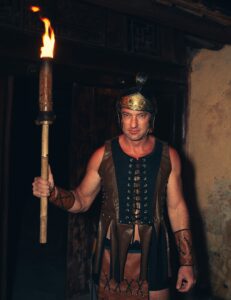
And third, Paul identifies him as a “fellow soldier.” Paul often used military terminology in his writings. But there are some indications that Paul was identifying Epaphroditus as an actual Roman soldier, possibly one of those who retired to Philippi after their tour of duty.
There are a number of reasons why this is likely true. Epaphroditus would have to travel a lot in order to deliver these financial gifts. That was an activity which a Roman soldier would be accustomed to. Long-distance travel was sometimes a risky undertaking in Roman times, for bandits would often lie in wait along roads. A former soldier would be a wise choice for transporting cash, as he would be well-equipped to handle any robbery attempts. Additionally, being a Roman soldier would give him easier access to Roman prisons.
The Philippian church needed someone dependable to deliver this financial support. A retired Roman soldier would have the freedom to undertake such an endeavor, and he would be both highly qualified and reliable.
On the Road Again
 On the Road Again
So Epaphroditus was sent to Rome with more financial support for Paul during his imprisonment. This would have been an arduous journey covering a distance of 730 miles. It would take two months to complete the trip. But it almost ended in disaster for Epaphroditus.
Paul recounts in Philippians 2:25-30, “But I think it is necessary to send back to you Epaphroditus, my brother, co-worker and fellow soldier, who is also your messenger, whom you sent to take care of my needs. For he longs for all of you and is distressed because you heard he was ill.”
Epaphroditus undertook this journey and succeeded in reaching Rome. But he missed his fellow believers back in Philippi. Obviously he shared the same love Paul had for them. But upon his arrival in Rome, Epaphroditus became terribly ill. We don’t know what the actual sickness was, but evidently it was very serious and potentially life-threatening.
“Indeed he was ill, and almost died. But God had mercy on him, and not on him only but also on me, to spare me sorrow upon sorrow.” It is likely that Paul had met Epaphroditus several times on previous trips, and had developed a brotherly fondness for him. The phrase “sorrow upon sorrows” shows how hard his death would have impacted Paul.
“Therefore I am all the more eager to send him, so that when you see him again you may be glad and I may have less anxiety.” Paul desired Epaphroditus to return safe and sound to Philippi. But he also urged the believers there to treat him properly. “So then, welcome him in the Lord with great joy, and honor people like him, because he almost died for the work of Christ. He risked his life to make up for the help you yourselves could not give me.”
“Honor to whom honor is due…” Although Epaphroditus is unknown to many Christians, he is nevertheless one of the heroes of the faith. He risked everything to be of service to those preaching the gospel. His name is not mentioned in Hebrews 11 (commonly referred to as “God’s Hall of Fame”), but God made certain he was included in the New Testament. His faithfulness and courage are an example to us. He was totally devoted to the preaching of the gospel.
How about you? Is your commitment to Christ as strong as Epaphroditus?
Did you enjoy this post? Leave a comment ~ share on social ~ and subscribe for more!
Related Posts:
“Casual Christianity: Is Jesus Your Mascot or Master?”